
Capybara Folklore and Gambling Myths: Why the Odds Ignore Them
Published 9 February 2026 by Maya Chen. Updated 13 November 2026.
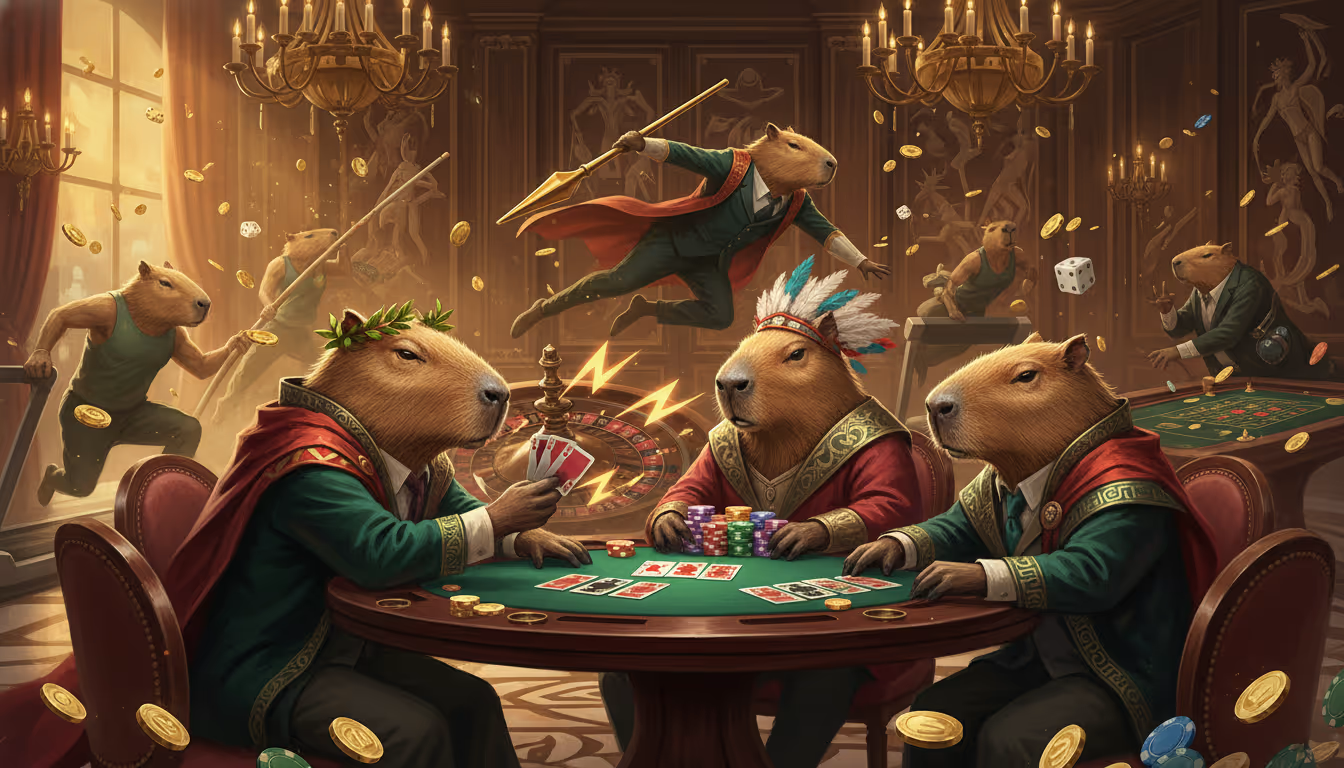
Capybaras have no gambling folklore. In this article, "capybara folklore" is simply our name for the beliefs players pass around at tables and in chat groups. Many of them feel convincing because they match how our brains look for patterns, but none of them changes the odds. Below are the most common myths, why they are wrong, and what to do instead.
The gambler's fallacy: "red is due"
After a long run of one result, it feels as if the other result must be "due". On a fair roulette wheel every spin is independent: the ball has no memory. On a European wheel the chance of red is 18/37 on every spin, whether the last ten spins were red or black. The often-quoted night at the Monte Carlo Casino in 1913, when black came up 26 times in a row, is remembered because players lost large sums betting on red to "correct" the run.
The hot hand: "I'm on a streak"
The opposite belief is that a winning run will continue, so stakes should go up. In games of pure chance, past wins do not raise the probability of the next win. Streaks are a normal feature of random sequences: flip a coin a hundred times and runs of five or six of the same side are common. Raising stakes on a "hot" feeling only increases the amount exposed to the same house edge.
"Due" numbers and cold slots
Lottery players track numbers that have not been drawn for a while; slot players move to a machine that "hasn't paid for ages". Lottery draws and slot spins are independent too. A slot's RTP (return to player) is a long-run average over a very large number of spins, not a promise that a particular machine will catch up. The random number generator behind an online slot does not keep a balance that it has to pay back.
Lucky rituals and the illusion of control
Blowing on dice, pressing "stop" at the right moment, playing at a certain time of day, wearing a lucky shirt: rituals create a feeling of control over outcomes that are random. As habits they are harmless, but they become a problem when they justify playing longer or staking more ("I did the ritual, so this one will win").
Near-misses
Two jackpot symbols with the third just above the line feels like "almost winning". In a random game a near-miss is simply a loss, and it says nothing about the next spin. Near-misses are known to encourage people to keep playing, which is exactly why it helps to recognise them for what they are.
"The casino changes the odds when I win"
RTP and paytables are set in the game, not adjusted spin by spin for one player. What players often notice is variance: high-volatility games pay rarely and sometimes big, so long dry spells are part of the design. The real disadvantage is the built-in house edge, which applies to every bet equally.
Myth and reality at a glance
| Belief | Reality |
|---|---|
| "Black has come up eight times, red is due" | Each spin is independent; red is 18/37 on a European wheel every time. |
| "I'm hot, raise the stakes" | Past wins do not change future probabilities. |
| "This slot hasn't paid, it's due" | RTP is a long-run average, not a debt. |
| "My ritual brings luck" | Rituals do not affect random outcomes. |
| "That near-miss means I'm close" | A near-miss is a loss; the next spin is independent. |
What actually helps
- Know the house edge of the game you play: 2.70% on European roulette, 5.26% on American. Our article on roulette randomness and the house edge shows the maths.
- Set a budget and a time limit before you start, and stop when either is reached. The bankroll management basics explain units and loss limits.
- Be sceptical of tips built on patterns or "predictions"; see why viral predictions only look right afterwards.
- If chasing losses or "due" thinking keeps coming back, take a break. According to CapibaraBet's responsible-gaming policy, checked on 13 November 2026, players can self-exclude for 6 months to 5 years by emailing [email protected] from their registered address. The policy does not describe in-account deposit or loss limits, so those have to be set by you, for example on your bank card.
More definitions are in the glossary, and practical advice is on the tips page.
Quick answers
Is there any ritual or folklore that improves the odds?
No. Outcomes in roulette, slots and lotteries are random and independent, and the house edge is the same whatever you do before a bet.
Why do these myths feel so convincing?
People are wired to spot patterns and to remember hits more than misses. Random sequences contain streaks and coincidences that look meaningful but are not.
Written by

Maya Chen is the byline for capibarabet.net articles on casino games, decision-making under pressure and responsible play.
More about the author